

Find the ideal MCS routine for you
Your knees creak in the morning. Your shoulders complain after a day in the garden. That stiffness isn't inevitable. Joint comfort is something you can work on, and it doesn't take a complicated routine.
Collagen is the most abundant protein in the human body. It forms the framework of your joints, tendons, ligaments and bones. Our hydrolyzed marine collagen helps support that joint structure, one glass at a time, in a routine you'll actually want to keep.


Why Cartilage Needs Collagen
Cartilage covers the ends of your bones and cushions every step, like a shock absorber. This connective tissue is about 70% water. Much of the rest relies on collagen fibres. When collagen becomes scarce, cartilage thins and the joint loses its flexibility.
One number puts things in perspective: starting in your mid-twenties, the body produces about 1% less collagen every year. The loss is slow. It goes unnoticed for a long time, until one day you start feeling the stairs in your knees.
Joint health therefore depends as much on natural aging as on your daily habits. Well-nourished cartilage holds up better against wear and tear, while chronic inflammation damages it faster. It's a balance, not a countdown.
To understand the role of this protein beyond your joints, our article on the benefits of marine collagen covers it all in nine answers.
Cartilage, Tendons and Ligaments: The Framework of Your Joints
A joint brings together three tissues that collagen holds in place. Articular cartilage absorbs the pressure between two bones. Tendons connect muscle to bone. Ligaments stabilize the joint and limit excessive movement.
These connective tissues share the same raw material. Chondrocytes, the cells that build cartilage, assemble collagen fibres and proteoglycans into a resilient matrix. Synovial fluid lubricates the whole system.
So a drop in collagen never affects just one spot. Joint pain shows up in the knees, then the hip, sometimes the fingers.
Why Natural Collagen Production Slows With Age
Natural collagen production depends on a continuous synthesis that your body maintains throughout life. Three factors slow it down: age, mechanical wear and a diet low in specific amino acids.
Menopause accentuates this slowdown. Lower estrogen levels reduce collagen synthesis in the skin as well as in joint tissues, which explains why so many women notice new stiffness at the same time as changes in their skin.
Mechanical wear does the rest. Every extra kilo of body weight adds 4 to 5 kilos of pressure on the knee cartilage with each step. A career spent on your feet, years of the same sport: your joints slowly draw down their reserves.
It's never too late to start. In fact, that's the very idea MCS was built on.
MCS Hydrolyzed Marine Collagen, Sourced From Wild Cod
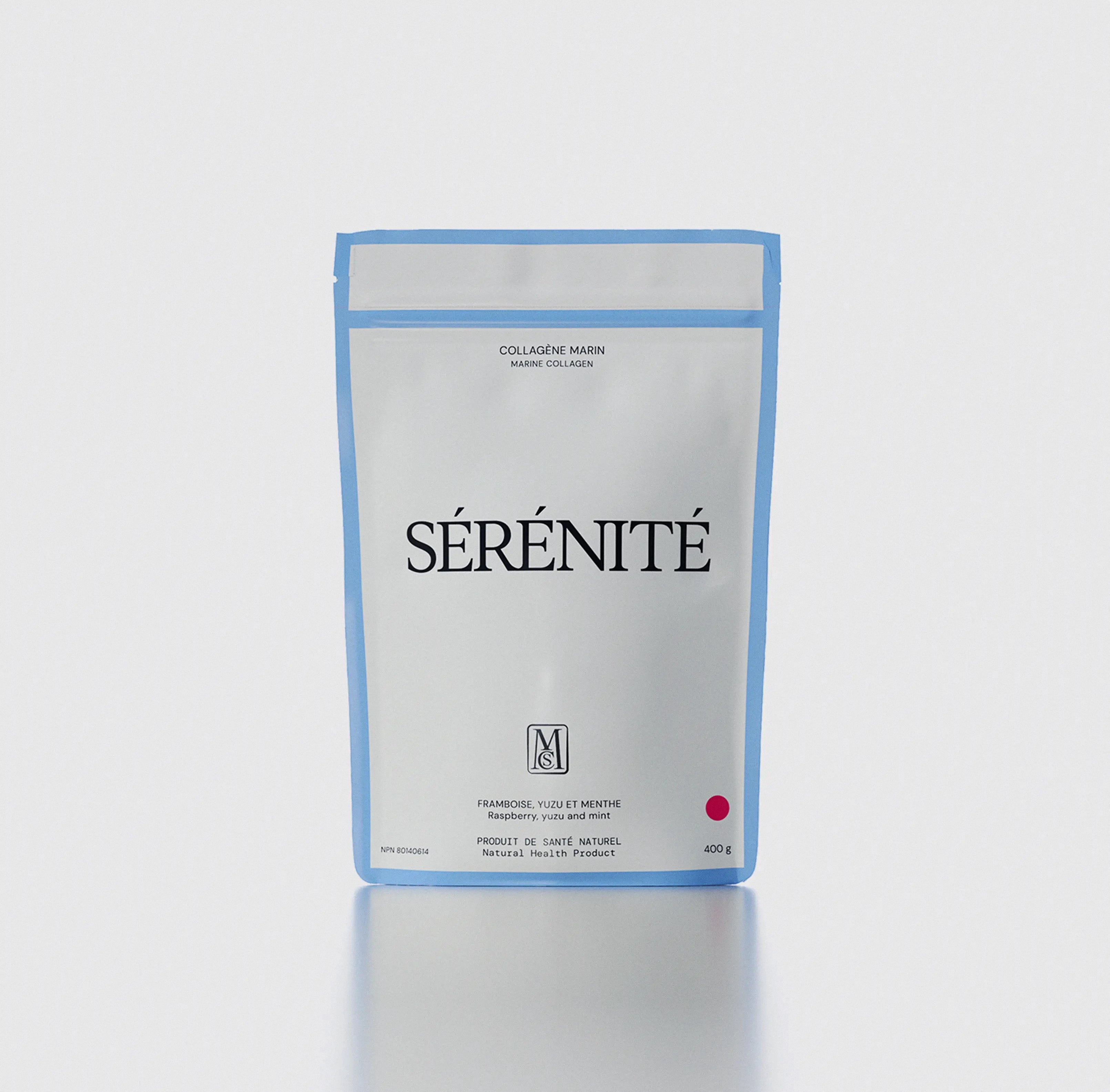
Our PURE marine collagen comes from the skin of wild cod. The powder is hydrolyzed in Quebec, unflavoured, and dissolves in hot coffee as easily as in a cold smoothie.
Hydrolysis is the step that changes everything. It breaks the protein's long chains into collagen peptides short enough to cross the intestinal barrier. Without hydrolysis, the molecule stays too large to be absorbed.
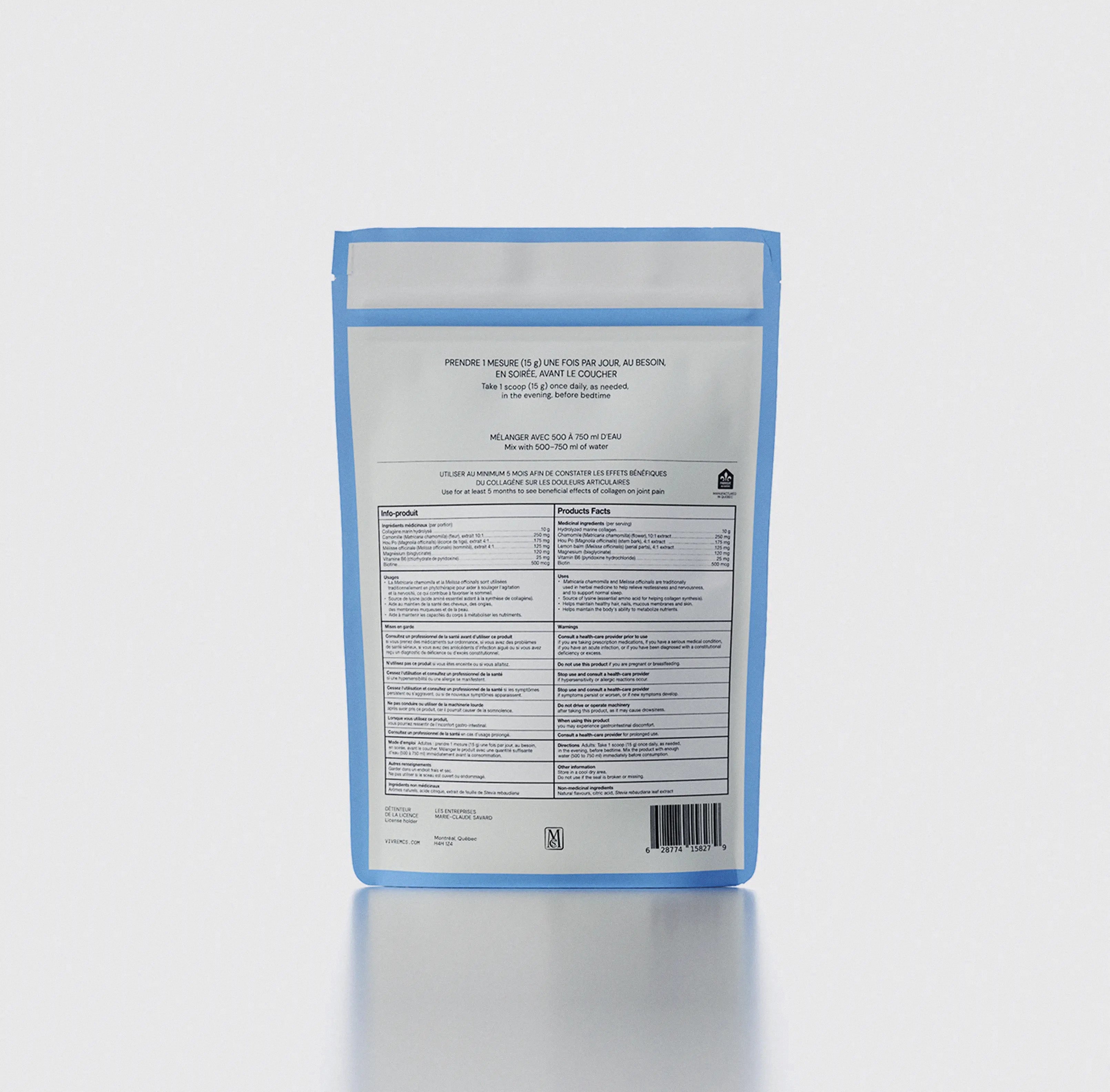
The result fits in one scoop: 10 g of hydrolyzed marine collagen, one serving, no fishy taste. That's how you recognize a good hydrolyzed collagen: a collagen powder that dissolves without clumps or aftertaste.
Collagen Peptides, Lysine and Bioavailability
Collagen peptides are short fragments obtained through hydrolysis. Their small size explains the bioavailability of marine collagen: it's absorbed quickly, and intestinal absorption doesn't call for any particular digestive effort.
Lysine deserves a mention. This essential amino acid, which the body can't make on its own, helps with collagen formation. Our PURE formula is a recognized source. Glycine and proline round out the amino acid profile.
Once in the bloodstream, collagen peptides reach joint tissues and signal chondrocytes to restart collagen synthesis. It's a message sent to your cartilage, not a direct replacement.
Type I or Type II Collagen: Which One Should You Choose?
The body makes several types of collagen. Two matter here.
- Type I collagen dominates in skin, bones, tendons and ligaments. It accounts for nearly 90% of the body's collagen. It's the type found in marine collagen.
- Type II collagen makes up most of the articular cartilage. It's found in small doses in collagen capsules, often as undenatured collagen.
Marine collagen works on the entire structure, which benefits your joints, bones and skin: it's the same active ingredient as in our collagen for skin collection.
An honest nuance: no study has named a definitive winner. The choice mostly comes down to the format you'll stick with for six months.
Find Your Collagen With the MCS Quiz
Six questions, one personalized recommendation. Our quiz points you to the collagen formula that fits best into your routine.
What Health Canada Recognizes About Joint Pain
Health Canada regulates the claims made by natural health products through a Natural Product Number (NPN). Our PURE marine collagen carries a recognized claim for joints, which isn't the case for every dietary supplement sold in Canada.
That rigour suits us. It lets us be precise about joints, where other supplements make sweeping promises.
"Helps Manage Joint Pain": What It Means
The authorized claim is short and worth reading word for word: marine collagen helps manage joint pain. Helping to manage isn't the same as healing. It's about supporting you along the way.
Clinical studies on collagen peptides focus mainly on joint comfort and mobility in active adults or in people with knee osteoarthritis. They observe a reduction in joint pain and stiffness, modest but real, after several weeks of daily use.
A joint supplement never replaces medical advice.
If you take medication, are pregnant or are breastfeeding, talk to a health-care provider before you start.
Daily Dose and a Minimum of Five Months
The dose studied for joints is around 10 g of collagen peptides per day. That's one scoop of our collagen powder, and it's also what you'll find in a marine collagen stick.
Health Canada recommends using the product for at least five months to see its benefits. Five months isn't a marketing constraint: it's the time the connective tissue in cartilage and tendons needs to renew itself.
That's exactly why consistency matters more than intensity. Our collagen subscription exists for that reason: it's one less thing to think about.
Making Collagen Part of Your Routine, One Habit at a Time
The best collagen for joints is the one you actually take. A perfect powder sitting in the cupboard does nothing for you.
Our approach fits in one sentence: pair your collagen with something you already do every day.
A Morning Routine That Lasts
Morning coffee is the strongest anchor we see in our community. Unflavoured collagen powder dissolves, your coffee tastes the same, and within two weeks the routine becomes automatic.
A few habits that work:
- In your coffee or tea, while it brews
- In your breakfast smoothie or yogurt
- In a glass of water, just before your shower
- In your evening soup or sauce
For an active lifestyle, our ÉNERGIE collagen adds electrolytes to the same marine base. Same habit, different time of day.
Training, Muscles and Recovery
Training puts as much demand on your joints as on your muscles. Every session breaks down collagen in tendons and ligaments, and this connective tissue repairs itself twice as slowly as muscle. That's where tendinitis tends to set in.
According to several studies in athletes, collagen peptides support muscle recovery and reduce soreness after exercise. Joint flexibility and tendon elasticity benefit too.
Our article on training and collagen explains how it works, and our collagen for muscles collection brings together the formulas designed for recovery.
After 50 and During Menopause
The MCS community is made up mostly of women aged 50 and over. Menopause is also when joint health becomes an everyday concern rather than an abstract idea, at the same time as skin firmness.
Marie-Claude Savard developed these formulas for herself first. She was looking for a quality hydrolyzed marine collagen, made here and simple to fit into everyday life.
Prevention is better than cartilage repair, and at this stage of life the two go hand in hand. Moving remains the first habit. Collagen supports your mobility; it doesn't replace it.
Discover the PURE Marine Collagen Formats
A 340 g bag, a box of 30 sticks, or both. Choose the format that keeps up with your day, at home or on the road.
Frequently Asked Questions About Collagen for Joints
You'll find more answers in our Vivre MCS FAQ.
Which Collagen Is Best for Joints: Marine or Bovine?
Marine and bovine collagen both provide type I collagen. Marine collagen is known for its smaller peptide size, which means slightly faster absorption. Our marine vs. bovine collagen comparison breaks down both options if you're still unsure which joint collagen is right for you.
Does Collagen Help Your Knees?
The knee is the most studied joint when it comes to joint collagen and joint pain. Trials on knee osteoarthritis observe less pain and better joint mobility after eight to twelve weeks. The synovial fluid and articular cartilage in your knees work together here. Collagen for knees won't repair an injury, but it supports the tissue around it.
Collagen, Glucosamine, Chondroitin or Hyaluronic Acid?
These ingredients play different roles in the joint. Glucosamine and chondroitin are building blocks of cartilage, hyaluronic acid supports joint lubrication, and collagen provides the framework.
Some other collagen supplements add turmeric, MSM, glycine or omega-3s for an anti-inflammatory effect. Curcumin and devil's claw mainly target inflammation, not cartilage structure. We chose to keep our formula simple rather than create a fifteen-ingredient joint supplement.
Is Collagen Good for Your Bones?
Bones are about one-third collagen, with the rest being mostly mineral. So collagen for bones works as part of a team: calcium and vitamin D handle bone mineralization, while magnesium and manganese help form connective tissue. Our Vitamin C + Calcium rounds out the routine nicely, since vitamin C is needed for normal collagen formation.
How Long Before You Feel a Difference?
Many members of our community notice the first effects after a few weeks, often in their nails and skin. For joint comfort, give it three months before judging, and five months for the recommended duration. Skin, nails and joints don't renew at the same pace. Consistency makes all the difference.
Caring for Your Mobility, One Habit at a Time
A collagen routine isn't judged in days. It's built over time.
Joint supplements work best when they go hand in hand with movement, good sleep and a balanced plate. A collagen supplement is one piece of the puzzle, not the whole puzzle.
Our collagen supplements also support several benefits at once. The same collagen for joints supports skin firmness, nail strength and joint comfort, because it's the same protein throughout the body.
Products Developed by Marie-Claude Savard, Made in Quebec
Every MCS formula has to meet the standards of Marie-Claude Savard. Made in Quebec, ingredients chosen one by one, and no promise we wouldn't keep.
Quality is something you can check on the label: the actual dose of marine collagen per serving and the Health Canada Natural Product Number. We display both.
Everything starts from within.
Explore the Collagen Collection for Your Joints
Three formulas, one marine collagen. Find the one that supports your joints every day.

Subscribe and enjoy an exclusive discounted price. Receive your products automatically, at your own pace, with all the flexibility you need.